Anúncios
Begin with your family’s routine
Before comparing breeds or adoption profiles, make a realistic picture of family life. Note the ages of your children, the hours adults are at home, your usual activity level, your housing and the help available during holidays or busy weeks. This turns a broad search for a family dog into a decision about what your household can reliably offer every day.
Include the full care commitment in that picture: exercise, mental stimulation, training, grooming, healthcare and companionship. A dog is not a role for children to carry alone. Adults need to be ready to organise care and to adjust routines when a puppy, an older rescue dog or a dog with additional needs requires more support.
On this page
Compare needs before appearance
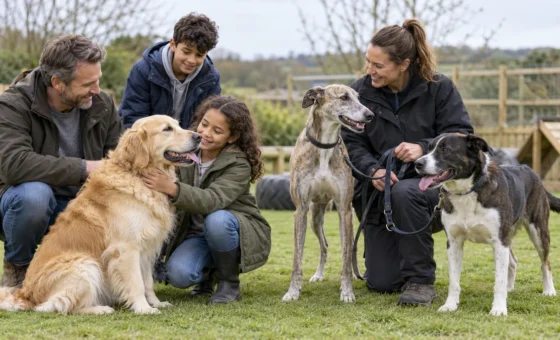
Use size and energy as practical questions, not as shortcuts to character. Consider whether children can move safely around a larger dog, whether the family enjoys regular outdoor activity, and whether the home can offer an undisturbed resting space. Grooming and health considerations also deserve the same attention as a dog’s appearance or online popularity.
Research a prospective breed’s ordinary requirements and downsides, then discuss the individual dog. Pedigree traits can be useful background, but they cannot promise that a particular dog will be comfortable with children. When adopting, ask the organisation to explain the dog’s profile and any stated home requirements rather than assuming a breed label answers every question.
Plan safe introductions and everyday boundaries
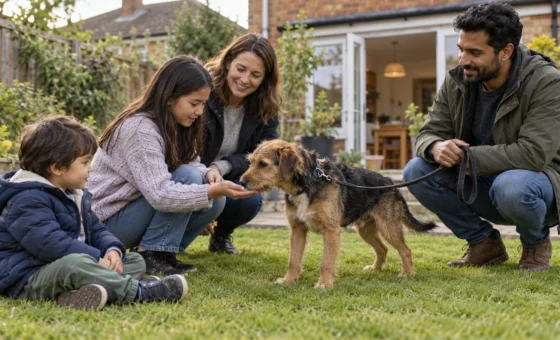
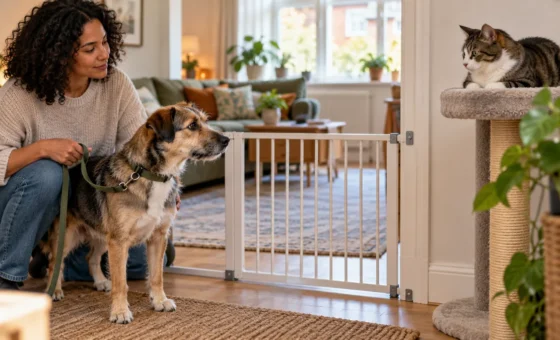
Prepare the children as carefully as you prepare the home. First meetings should be calm and closely supervised by an adult. Give the dog a quiet area where adults and children leave them undisturbed, and agree simple household rules about food bowls, toys, sleep and gentle interaction. If the dog or child seems uneasy, end the interaction and create space.
You will leave for an external site. Official portal. Free access.
Use this family-dog decision checklist
- List responsibilities Assign adults to exercise, feeding, training, grooming, veterinary care and cover for busy days.
- Check the match Compare the dog’s likely size, activity needs and care needs with your children, home and routine.
- Ask about the individual For adoption, discuss the dog’s rehoming profile, previous needs and suitability requirements with the organisation.
- Meet safely Arrange a calm, supervised meeting where possible and observe whether everyone can stay relaxed.
- Set home rules Create a resting space and teach children to give the dog room around food, toys and sleep.
- Get help early Speak to a vet or qualified behaviour professional if you see worrying changes in behaviour or signs of discomfort.
Keep introductions short and positive, especially during the first days at home. Teach children to let the dog approach rather than chasing, hugging or taking items away. Watching body language together helps adults respond before stress builds. The goal is not to make children responsible for reading every signal; it is to make adult supervision active and predictable.
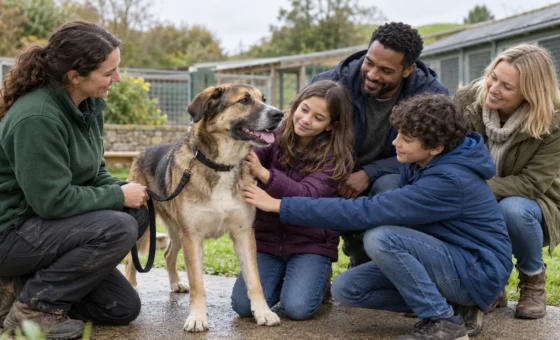
If you are buying a puppy, research relevant health testing and choose a responsible breeder. If you are rehoming, ask the centre which home conditions are essential and whether the dog needs experience, a particular age range of children or gradual introductions. A good decision can include deciding that a specific dog, or even the timing, is not right for your family.
Once a dog joins the family, revisit the plan as children grow and routines change. Continue training, protect the dog’s rest, and contact a vet if behaviour changes. Choosing carefully is valuable, but steady care and respectful boundaries are what help a family and dog live well together.
Frequently asked questions
What should we compare first when choosing a family dog?
Start with time, exercise, space, grooming, health care and the adults available to provide consistent care. Then compare those needs with the individual dog’s profile.
Can a breed label guarantee a dog will be good with children?
No. Breed research is useful context, but each dog has individual needs and personality. Meet the dog safely and follow advice from the rehoming organisation or responsible breeder.
Should children be left alone with the family dog?
No. Children and dogs should be closely supervised by an adult, including with a familiar family dog, so discomfort can be noticed and the interaction ended safely.
What if our new dog seems uncomfortable around a child?
Create space immediately, keep the situation calm and seek advice from your vet. They can assess for a medical issue and guide you to appropriate behavioural support if needed.