Anúncios
A large dog can bring warmth, routine and plenty of character to family life, but size alone does not tell you whether a dog will fit your household. Dogs Trust describes its large dogs as those between 25kg and 45kg, a group that includes Labradors, greyhounds and Siberian huskies. Start with the life you can offer: daily time, training, activity, space to rest and the ages and needs of everyone at home.
You stay on this website. No payment required.
Think in terms of household fit
For a family, the strongest starting point is not a list of supposedly perfect breeds. It is an honest picture of your routine. Consider who will walk the dog on busy days, how children will be supervised during early introductions, whether the dog will be left alone, and what help is available if training takes time. A large dog needs practical handling as well as affection: transport, leads, feeding, grooming and veterinary care all form part of the decision.
On this page
- Energy Match the dog’s likely activity and enrichment needs to the time your family can reliably give every day.
- Handling Make sure adults can manage the dog safely on walks and during visits or travel.
- Children Plan calm, supervised interactions and ask specifically about the dog’s observed behaviour around children.
- Home Think about sleeping space, access to exercise, neighbours and any landlord or housing rules.
Large breeds to research, not promises to rely on
Labradors are often on family shortlists because the Royal Kennel Club describes the breed as versatile, including as a family companion. Its profile also lists the Labrador as large and notes more than two hours of exercise per day, a large house and a large garden in its breed characteristics. Treat this as a prompt to check whether your own household can meet a dog’s needs, rather than a guarantee about any one dog.
The same principle applies to every large breed and crossbreed. A calm adult dog may suit one family better than a high-energy younger dog of a breed with a popular family reputation. Ask about the dog in front of you: their confidence, walking habits, recovery after excitement, previous training and the kind of home where they have been assessed to thrive.
Can your family adopt a large dog?
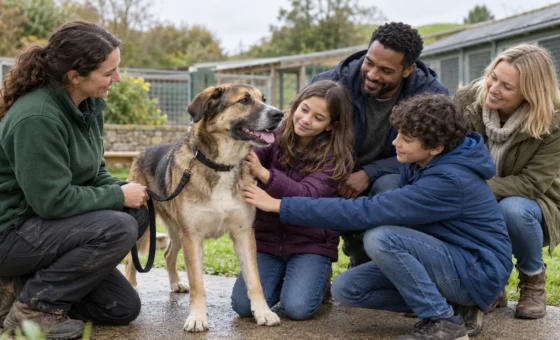
Yes, adoption can be an option for families, but it is a matching process rather than a simple size filter. Woodgreen says it considers each dog’s needs and applicants’ individual circumstances, including flats, young children and homes without a garden. The charity also explains that settling in can take weeks or months and that many dogs need continuing training. Being flexible about breed, age and appearance can make it easier to focus on the match.
Questions worth answering before you apply
Write down your non-negotiables before browsing profiles. Dogs Trust recommends asking about exercise, house training, behaviour around children and other animals, time alone and behaviour on walks. These answers help a rehoming team understand both what you need and what you can realistically offer.
Frequently asked questions
What counts as a large dog in the UK?
Dogs Trust groups large dogs as those between 25kg and 45kg. Weight is only one planning tool, though; exercise, handling and temperament matter too.
Is a Labrador automatically the best large dog for a family?
No. The Royal Kennel Club describes Labradors as versatile family companions, but every dog is an individual. Meet the dog, discuss their needs and compare them with your household routine.
Can a family with children adopt a large rescue dog?
It may be possible when the individual dog and household are a suitable match. Be open with the rescue about children, other pets, your home and the time you can commit to training.
Should I choose a dog by breed or personality?
Use breed information to guide your research, then make the decision using the individual dog’s observed behaviour, history and needs alongside your family’s circumstances.